
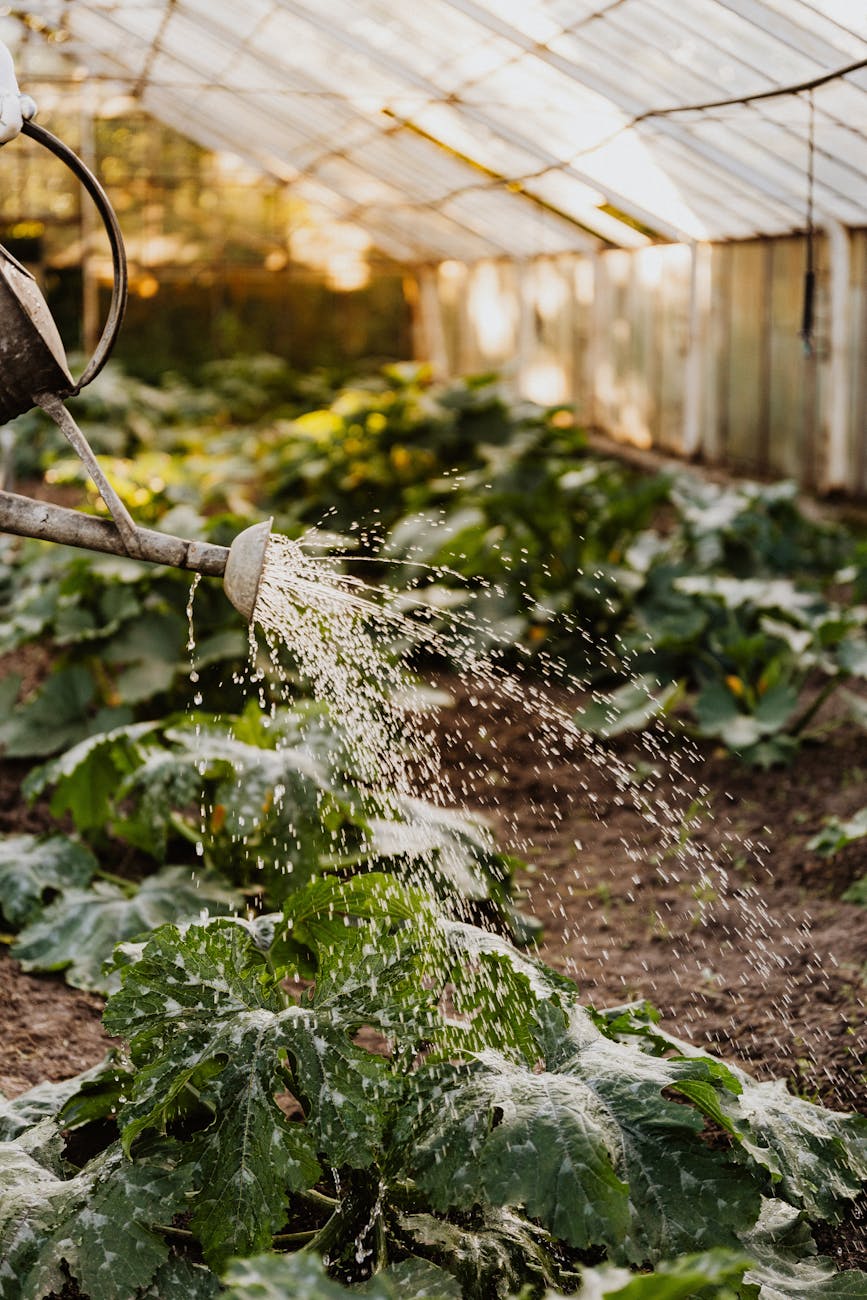
A couple of years ago I decided to make a big change in my stewardship of the soil and plants in our garden. For many years I have grown vegetables with mixed success, and like many growers of my generation, I have utilised artificial fertilisers, herbicides and pesticides alongside more traditional composts. It is only recently that I have discovered the difference between soil and dirt and the harmful effects of artificial inputs on soil life and how this translates to plant health and the nutritional quality of our food – if you are interested in the difference between soil and dirt you might like to read my recent post on this subject – What is the difference between Soil and Dirt?
Taking my first tentative steps on my Regenerative Journey to better growing I implemented a No-dig strategy and was determined to only use composts to feed my plants. At that time I had not learned the art of effective home composting so I had to resort to buying from commercial sources (my compost adventures will be the subject of a whole other post). I supplemented the composts with some home made garden amendments such as fermented nettle and comfrey (again I will discuss these in more detail elsewhere). The results that I achieved were mixed and it was difficult to draw firm conclusions of which composts and/or amendments were most effective. In my enthusiasm to try out new things I had not followed a very structured approach or even kept very good records – it was time to put my scientist hat on and do some Citizens Science experiments!
But where to begin? There are lots of approaches to building soil fertility utilising composts and amendments (as I alluded to above) but what if you don’t have the ingredients you need or the expertise and resources to make them? Can’t you use a commercial product instead? There seem to be a growing number of these popping up online and in garden centres – organic biofertilisers, microbial teas, root inoculants etc. but which ones are right for my garden and how effective are they?
Having done a little online research I opted for a Microbial Tea (from Ecothrive) which looked to be a one stop shop of root inoculant, beneficial microbes and plant nutrients. I was particularly interested in the Endo Mycorrhizae and nitrogen fixing bacteria that were listed in the ingredients; I was not sure if my soil was deficient in these (If you are interested in learning more on the background science of these take a look at Box 1 below). To broaden my experiment I decided to try out this product on crops from different plant families which I routinely grow in my garden so I would have some historical data to compare the results against. I chose Broad Beans, Sweetcorn and Tomatoes – in this post I will share with you the hot off the press results from the Broad Bean experiment.
Box 1

Endo Mycorrhizae
•Mycorrhizae are fungi which form a symbiotic relationship with plant roots. In return for sugar rich exudates from the plant roots, the fungi seek out water and nutrients (such as phosphorous and trace elements) and bring them back to the plant. At least 90% of plants form a Mycorrhizal relationship with one or more fungi.
•There are two types of Mycorrhizae, the first are Ecto Mycorrhizae which associate with Hardwoods and Conifers and the second are Endo Mycorrhizae, sometimes referred to as Arbuscular Mycorrhizae (AM), which associate with vegetables, grasses, shrubs, and perennials (the main exception being Brassicas)
•Mycorrhizal fungi extend the reach and surface area of the plant roots by 100-1000 fold making the plant healthier and more resilient to drought.
•Under natural conditions soil contains all the Mycorrhizae and spores a garden needs but they are fragile and intensive growing practices can easily damage them.
•To find out more on this topic see – https://mycorrhizae.com/how-it-works/
Root Nodules
•Leguminous plants such as beans, peas, clovers and vetches form root nodules
•Root nodules are formed by the plant in association with Rhizobia bacteria which fix nitrogen from the atmosphere and transform it into ammonia which the plant can use to generate amino acids, proteins and other essential molecules
•Root nodules which are actively fixing nitrogen are pink to red in colour
•To find out more on this topic see – https://pubs.nmsu.edu/_a/A129/

I determined that the overall goal of my experiment was to understand the impact of the microbial tea on crop yield, plant health and root quality and, as Broad Beans are legumes, I was particularly interested in seeing if there were any differences in nitrogen fixing root nodules. I designed an experiment in which I would grow two lots of beans under as near as possible equivalent conditions but in one case I would treat the plants at various stages with the microbial tea and in the other case I would just use rainwater as a control. As I wanted a good number of plants to compare I decided to duplicate the experiment in a second plot (for more details of the experiment design see Box 2 below).
Box 2

Protocol
– 30 seeds sown for each lot; control lot soaked pre-soaked in rain water; test lot pre-soaked in Microbial tea solution (1g per litre dilution)
– Seedlings transplanted into 2 plots A and B; 24 control seedlings pre-soaked with rainwater; 22 test seedlings pre-soaked with microbial tea (1g per litre dilution)
– Mature plants treated monthly; 22 mature control plants soaked with rainwater; 20 mature test plants soaked with microbial tea (0.5g per litre dilution)
– Pods from plants in each lot were harvested on the same morning within a one hour window; number of pods, mass of shelled beans and BRIX values recorded
– Roots of plants from each lot were examined and root nodule samples taken for analysis
So what were the results? How much difference, if any, did the microbial tea make? The vagaries of the English spring weather, with unseasonably high rain and relatively modest temperatures, meant that we had a bit of a shaky start – there were so many slugs! All of the plants were damaged and I lost some seedlings but luckily there were enough in each lot to be able to continue. In terms of plant health there seemed to be little difference between the treated and control lots. All of the plants had some degree of aphid attack suggesting that the microbial tea had not had a dramatic effect on plant vitality (healthy plants are more immune to pests).
As we neared the point where the beans were ready to harvest I could hardly hold myself back from picking some pods to get some preliminary data. Visually the number of pods on each plant and their size didn’t look particularly different. As I shelled the pods from each of the lots, taking care to count the pods first, I stood with baited breath over the scales as I weighed each batch. And… as with any experiment of this type the results were not definitive.
As you can see from the plot below, in one case the microbial tea seemed to give a slight boost in both the yield of pods and beans but in the other case there seemed to be no difference at all. Given that both of the beds had received the same regimen of overwinter compost and mulch and had both been used to grow similar crops (beans, and/or beetroot and chard) the previous season there did not seem to be an obvious explanation for the variation in yield.

A further measure of crop vitality is the refractive index of saps or juices, so called BRIX value (see Box 3 for more info on BRIX). For each of the experimental lots a sample of beans were taken and their juice squeezed out and analysed. Again the BRIX values were all broadly similar ranging from 12-16 for the control groups and 10-15 for the treated groups. As BRIX measurements are quite variable I would say there was no significant difference between any of the groups.
Box 3
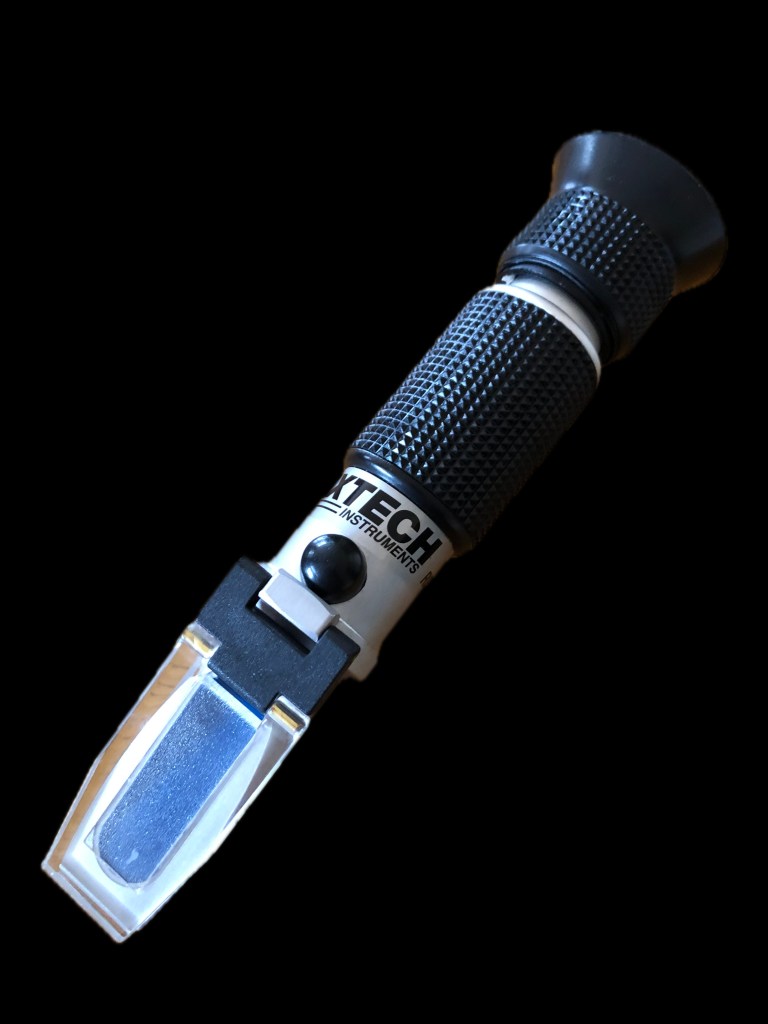
BRIX – Refractive Index
•Brix (%) is a measure of the light refracting through dissolved solids & sugars with the use of a portable refractometer, and is a useful and quick indication of the health of your plant sample.
•Brix levels fluctuate throughout the day, generally peaking in the afternoon before dropping at night. Brix levels will also vary due to stress or dehydration, so this is a metric you can continue to record regularly throughout the year, to keep a good record of how things are changing.
•The ‘fuzziness’ of the line you read through the refractometer is an indicator of how nutrient dense the sample is – a sharp line can indicate calcium deficiency for example.
•A low brix reading indicates your plant is vulnerable to pest attack and has high nitrate levels (which works against nutrient density & complexity).
•To find out more on this topic see – https://blog.nutri-tech.com.au/the-beauty-of-brix/
What about the roots? The make-up of the microbial tea included root boosting mycorrhizae and nitrogen fixing bacteria so would we see a difference there? The roots of plants from each lot were remarkably similar both in terms of vigour and the number of root nodules – the root nodule density was high in all cases and the nodules themselves were healthy and appeared to be fixing nitrogen effectively (they were all pinkish-red – see picture below).

So on reflection, I would say that, for the broad beans at least, the microbial tea has not made a big difference. Overall the broad bean yield (of all beans combined) was around 12% higher per plant than the previous year much of which can probably be attributed to the improved quality of the home made compost which had been added to the beds. We shall have to see if the story is any different for the Sweetcorn and Tomato experiments which are ongoing.
I think it is worth making a final note on Mycorrhizae based on the sage advice from Jeff Lowenfells & Wayne Lewis in Teaming with Microbes. Most vegetables, annuals, grasses, shrubs and perennials form symbiotic relationships with Endo Mycorrhizal fungi which provides the plants with a valuable source of nutrients. Growing methods such as tilling (digging) and soil sterilisation disrupt this relationship. So in cases where your soil is recovering from tillage or when you are planting seeds into sterilised potting composts it may be beneficial to inoculate your plants. This leaves me to wonder whether my homemade potting compost and No-dig veg plots fed with homemade compost already have all the microbes that my plants need…
 Heather Comina