News & Updates

Featured

Secrets of Healthy soil

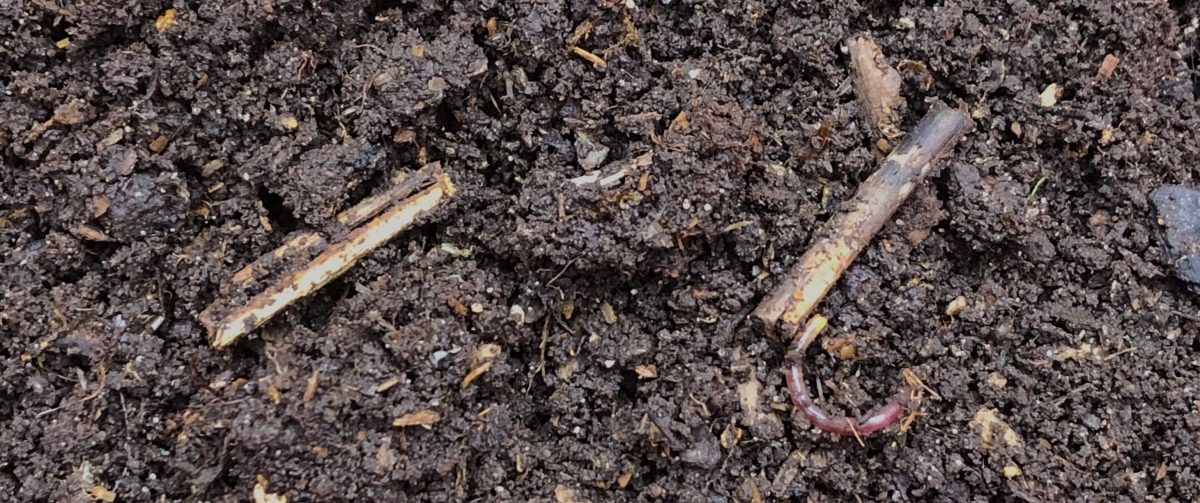
Soil or dirt? Often, we use these words interchangeably but in fact they are very different things. Healthy soil is the deep brown colour of 70% dark chocolate and crumbly; it contains a minimum of 3% organic matter (ideally 20%) and is full of living organisms. By comparison dirt is pale brown in colour, more like milk chocolate and, compacted with large clumps; it is low in organic matter (<3%) with little or no living organisms present.
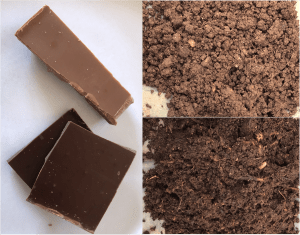
Comparing chocolate and soil colour – photos by Heather Comina

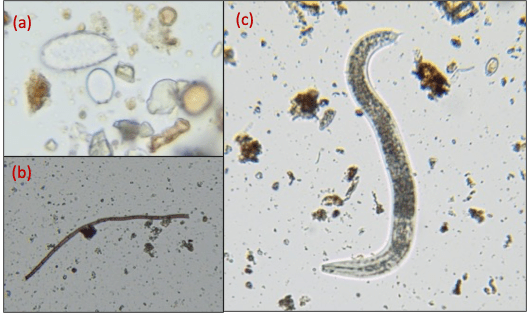
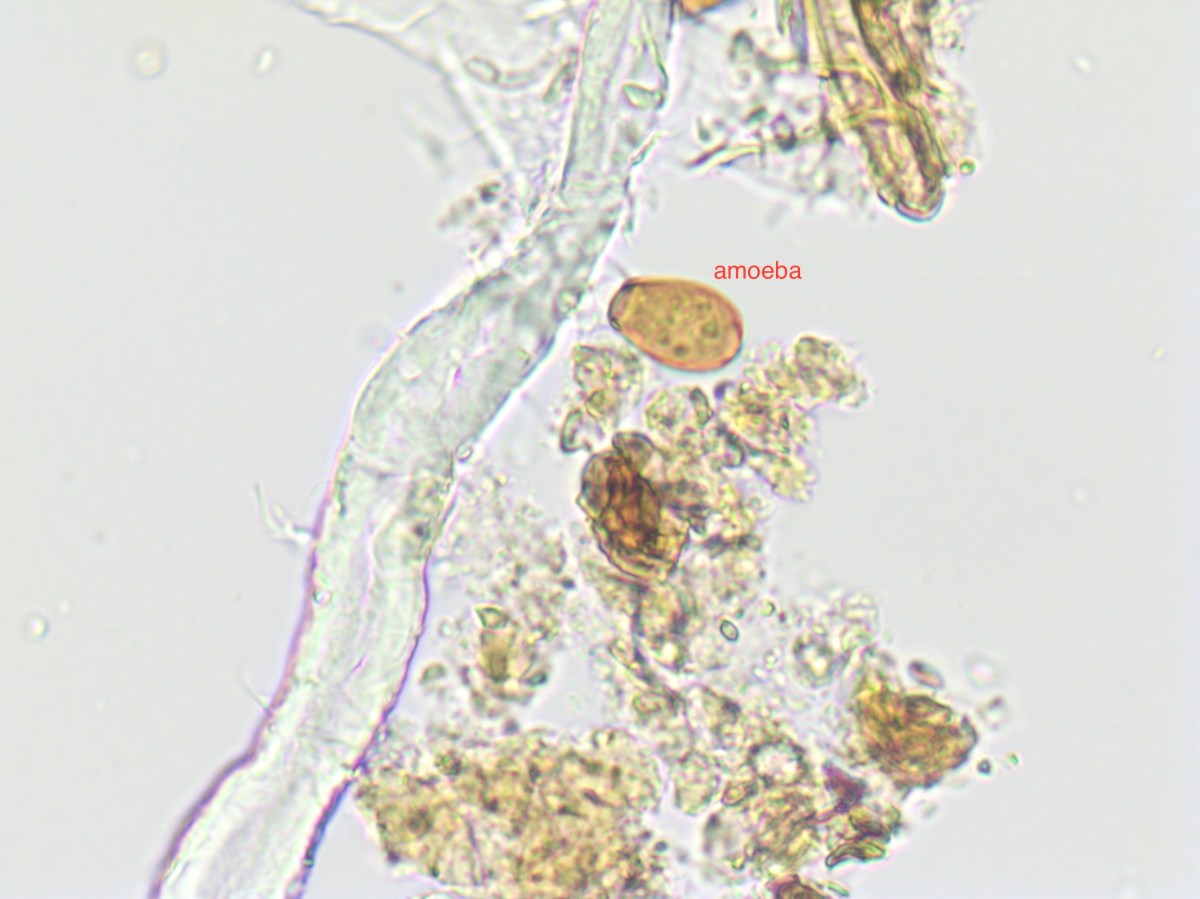
Healthy soil holds a multitude of living organisms which mostly reside in the top 6 inches (15 cm). Some you can see with the naked eye (earthworms, centipedes, ants, beetles etc.) others can only be revealed under a microscope (nematodes, protists, fungi, bacteria). It is estimated that a teaspoon of healthy soil contains a billion bacteria, tens of metres of fungal threads (hyphae), thousands of protists (amoeba, flagellates, ciliates) and dozens of nematodes.
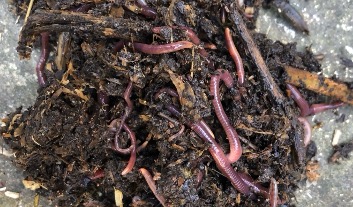
Earthworms – photo by Heather Comina
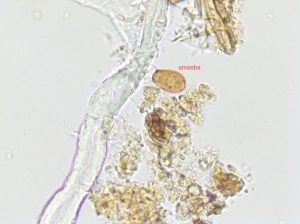
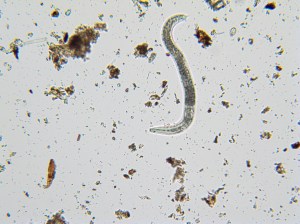
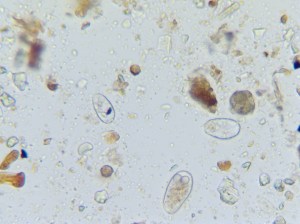
Microscope images of soil organisms – (a) various amoeba; (b) fungal thread; (c) nematodephotos by Heather Comina

All life needs energy to survive – in the vast majority of cases this energy comes from carbon-based materials supplied by plants, waste products from other organisms or the bodies of dead organisms. Most organisms consume more than one food source creating a complex web of interactions between them. In the context of soil, we call this the soil food web. Each soil environment, with its differing set of soil organisms, produces a different soil food web but, all webs have one thing in common, they always start with the plant.

Plants are at the top of the food pyramid (the first trophic level). They use energy from the sun (via photosynthesis) to generate carbon-based molecules (sugars) from carbon dioxide and water. Some of these sugars are used by the plant but much of them are transferred to the roots where they are secreted as more complex carbon-based molecules such as carbohydrates and proteins (exudates).
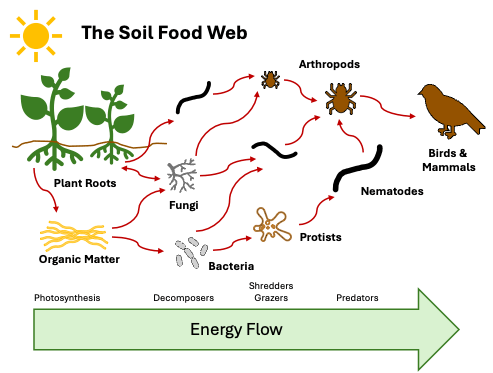
Simplified Soil Food Web diagram – created by Heather Comina

These exudates have a purpose – they wake up specific soil bacteria and fungi by providing them with energy to grow and multiply within a zone around each root, a couple of millimetres wide, which is called the rhizosphere. The bacteria and fungi absorb minerals from the surrounding soil which are not directly accessible to the plant. These bacteria and fungi are in turn eaten by other microscopic soil organisms (e.g. nematodes and protists). These higher organisms create waste which is rich in in essential nutrients that the plant needs (e.g. nitrogen, phosphorous, mineral elements including potassium, calcium, iron etc.). These are absorbed from the rhizosphere by the plant roots. So, in a sense the rhizosphere provides an environment where nutrients can be “traded” between organisms for mutual benefit. The key point to note is that the higher organisms (nematodes, protists etc.) are needed in order to release the nutrients “gathered” from the surrounding soil environment by the bacteria and fungi. Without them the system breaks down; the plant needs a fully functioning soil food web to be healthy.

The function of soil food web organisms extends beyond the “trading” of nutrients. They are also important for establishing soil structure – soil that is porous, well aerated, able to soak up and hold water like a sponge. Soil bacteria generate sticky glues and fungi create long thin threads both of which serve to bind soil particles together to form aggregates. Higher organisms such as earth worms, insect larvae and burrowing animals create pathways within the soil of varying sizes serving to mix the soil as well as generate a porous sponge-like structure.

Soil life serves to cycle nutrients through the entire soil food web. When plants and any other soil food web organisms die, they decompose and the nutrients that they contain are recycled, their bodies are consumed by other soil organisms – one organism’s waste is another organism’s food. Without this recycling system essential nutrients would eventually be washed out from the soil.

It is useful to note that if we (as gardeners or growers) apply a chemical fertilizer to the soil only a tiny fraction of it reaches the rhizosphere and is absorbed by the plant. The rest drains through the soil reaching the water table and eventually ending up in rivers and oceans where it has a negative environmental impact. In contrast a functioning soil food web ensures that essential nutrients (many of which are not present in chemical fertilizers) are released within the rhizosphere where and when they are needed by the plant – the addition of external nutrients is not needed!

A healthy soil food web also serves to control disease causing (pathogenic) organisms. Although present in the soil, pathogenic bacteria and fungi are held in check by the vast array of beneficial organisms which outcompete with them for food. Soil health, and consequently plant health, is dependent on the diversity of beneficial organisms which can flourish under a wide variety of conditions. Every part of the soil food web has its place, keeping the other members in balance – it is a self-regulating system. If external forces (such as pesticides and fungicides) start to disrupt this balance then the web no longer functions effectively, nutrient cycling becomes disrupted, and the door is opened to plant diseases.

Whilst it is fairly apparent that some conventional gardening practices (such as the use of pesticides) kill soil food web members at all levels from bacteria up to earth worms and beyond. It is less obvious that using chemical fertilizers is also harmful to the function of the soil food web. Chemically fed plants bypass the microbial assisted method of obtaining nutrients. Microbe numbers fall as the plants stop releasing exudates into the soil; consequently, the higher organisms which feed on the microbes also become depleted. Nutrient cycling within the soil food web starts to fail. Higher organisms such as earth worms, which are irritated by chemical additives, move elsewhere. Waste materials (such as dead plant matter) are no longer broken down, the soil becomes compacted, less aerated and unable to absorb water. Conditions for growing plants become less and less ideal and any interventions such as digging to aerate the soil only serve to make matter worse by breaking up the fragile networks of fungal hyphae – our soil slowly turns to dirt.

However, all is not lost; we have the potential to reverse the decline to dirt and regenerate our soil by making a few simple interventions.

  • Avoiding further disruption to the soil food web by phasing out the use of toxins such as pesticides, herbicides and NPK fertilisers
  • Increasing the level of soil organic matter by addition of composts and mulches
  • Encouraging the return of soil food web members by use of good quality composts (aerobic, balanced, mature), compost extracts and compost teas [beware – many commercial composts are not what you need!]
  • Maintaining the soil food web by minimal disruption, employing no-dig or minimum till approaches; leaving roots in the ground after harvest; keeping the soil covered all year round with mulches or cover crops

There is much to say on these regenerative approaches; too much to cover here but, fear not, we will cover more on composts and other bio-amendments in a subsequent blog post.

So, why should we care about the health of our soils? Plants grown in dirt are weak and prone to disease; plants grown in healthy soil are lush and rich in nutrients. As, gardeners and growers, we want our plants to be healthy with a minimal need for costly interventions. As consumers we need healthy plants because we are what we eat; we benefit from the nutrients and healthy gut microbiome that we can only get from plants raised in healthy soil.

healthy soil = healthy plants = healthy food = healthy people

If you would like to dig deeper into this topic you can find a wealth of information in the following resources:

Video by Dr Elaine InghamIntroducing the Soil Food Web

Book by Jeff Lowenfels & Wayne LewisTeaming with Microbes

Featured

Green Book Launch

Art in its many forms be it paintings, poetry, songs or stories, has the power to evoke strong feelings and emotions; providing a link to memories which are often deeper and more sensual than the art itself, a gateway to deeper meaning.

No one will protect what they don’t care about, and no one will care about what they never experienced.

Sir David Attenborough

When we have the chance to be immersed in nature we have the opportunity to capture our experiences, our sense of joy and wonder and transform them into new pictures, poems, stories – stories we can share with others, helping to strengthen their connection with nature, encouraging them to experience it for themselves.

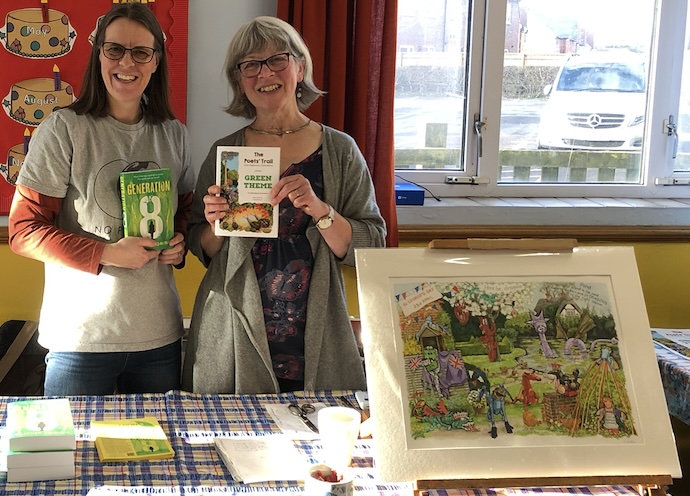
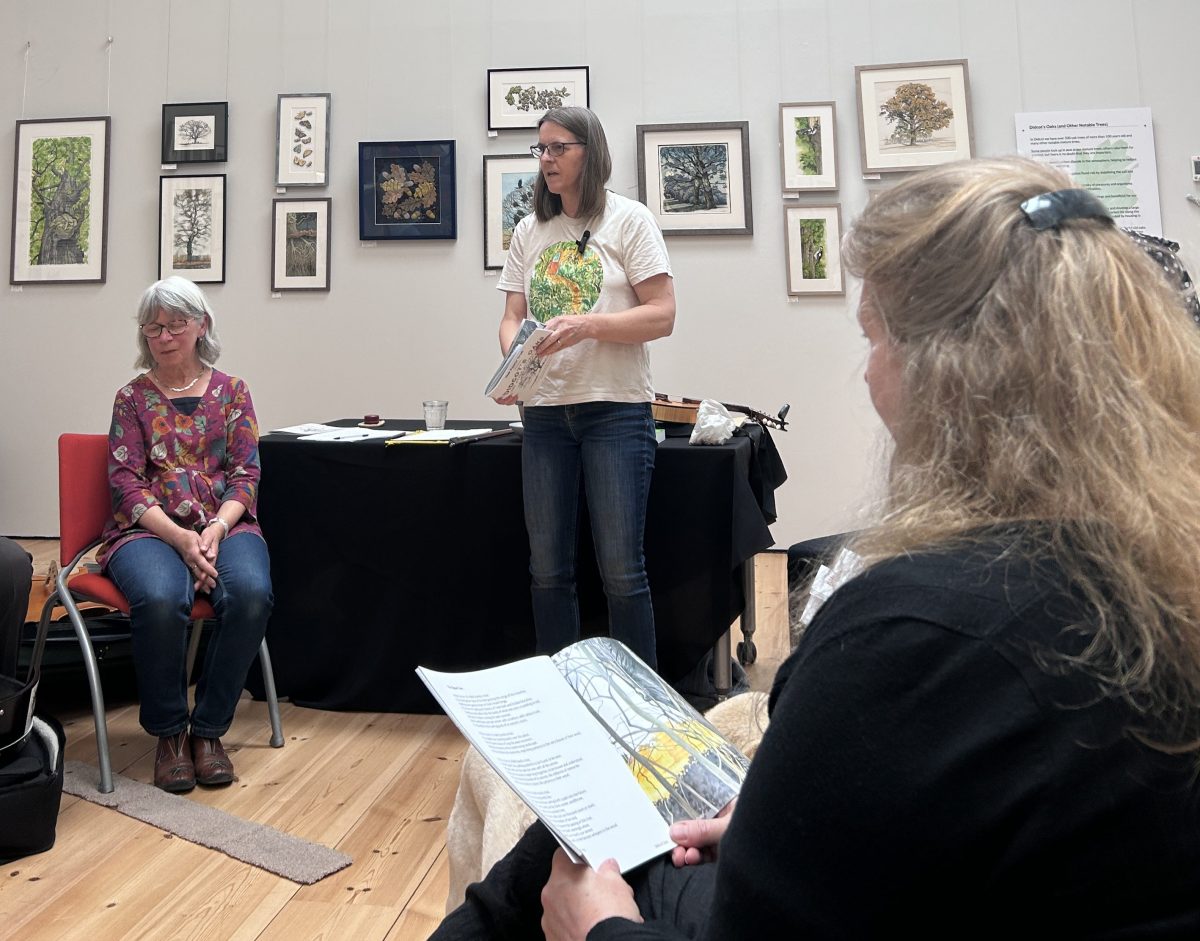
This weekend I had the pleasure of joining local artist Linda Benton and some of the poets from The Poets Trail – Green Theme to share our stories and talk about how our experiences of the natural environment in our local village had inspired us and helped us to feel more connected.

Our friends from the local sustainability group, HUGS, were on hand to share information about local biodiversity projects and stimulate our senses and imaginations with their “What’s in the box?” exhibit featuring a wide range of natural objects. The descriptions we came up with were then transformed into poems by some of the resident poets – a real case of art in action!

Amidst the chatter and copious quantities of tea and cake we took turns to discuss the inspiration behind our work and read short passages. Below is an excerpt of the story I shared with the group about my novel – Generation 8.

In 2020, during lockdown, I had the chance to explore our local area and I challenged myself to learn about the trees I saw. One day I came across and amazing tree; at the time I didn’t know her name. Later I found out that she was a Black Poplar, a relatively rare tree. She was glorious with long straggly branches some of which were interwoven with ivy, others old and dying. Her enormous trunk with characteristic deeply grooved and riven bark, dotted here and there with little holes, homes to many tiny creatures. In her corner of the field she seemed to be standing watch, taking note of all that passed.

I felt connected to her in a way that is hard to explain. It was as if she had something to share, if I only I knew how to ask. I wondered what she might have witnessed in her lifetime of maybe 200 years. What story would she tell? I imagined it would be a story of our Parish, the wildlife, the people, our community, the land. How things had slowly altered over the passage of 7 human generations, steadily becoming less vibrant.

Generation 8 is my attempt to tell this story – an exploration of lost connections over the passage of 7 generations; an attempt to regain a sense of place and belonging; an imagined future more attuned to nature; a future where the next generation – Generation 8 – might thrive.

Generation 8 is available in paperback and e-book formats – follow the link below to purchase your copy https://www.troubador.co.uk/bookshop/contemporary/generation-8/

Featured

Generation 8 – my new novel

“There are big days and small days…” (to quote Michael Morpurgo) The big days are often characterised by pushing ourselves out of our comfort zones and doing something completely new.

28th May 2023 will be a big day for me as it marks the publication of my first novel – Generation 8

When I mentioned to some of my friends that I was writing a book about the climate and ecological emergency they assumed that it would be non-fiction. Through my work with Climate Concepts on climate communication, I quickly became aware that people engage best with stories, stories which are relatable to their lives and experiences. I decided that a novel would serve me better.

The narrative around the climate and ecological emergency is typically one of doom and disaster suggesting that it is too late and that we as individuals are powerless to act. Whilst the situation is dire it is not without hope.

The biggest reason that we feel powerless is that we have lost the ability to see how our lives are connected to each other and to the wider community of life. We have little perspective on how our hectic everyday, consumption driven lives are impacting the world around us. The possible paths to a more connected, balanced, thriving future have been talked about for decades but they lie buried in academic literature and policy documents which are inaccessible to many people.

Generation 8 is my attempt to craft a story which I hope will be relatable and have cross generational appeal. A story which provides the reader with a unique perspective on humanity’s almost imperceptibly slow disconnection from the world. A story of hope and possibility exploring how we might learn to re-connect with who we are, where we belong and mend our relationship with mother Earth.

Generation 8 is available in paperback and e-book formats – click on the button below to purchase your copy

Please share this widely – the book is a story with a powerful message – a message I would like to share with as many people as possible.

If you like what you read please consider posting a short review.

Happy Solstice!

The Winter Solstice has been a cause for celebration for millennia. A marking of the end of the dark days and the return of the light.

In the UK much of our ancient culture and traditions have been lost to history. Yet many of our seasonal festivities are rooted in that past. The Yule log, the decoration of homes with boughs of holly and scented fir. The communal coming together, songs and sharing of food. It is a time for stories, reflection, bonding, re-kindling a sense of hope for the coming season.

Whilst the world outside may seem dark in so many ways I am mindful of the fact that there is also light to be found if we look for it. There are good things, kind things, positive things. There are hopes and dreams waiting to burst forth in the renewed light of the year to come. Wherever you are, whomever you are with over the coming days I invite you set aside the lamenting of the woes and share instead something kind, however small. It is the small steps that start the great journeys.

In the coming season I look forward to taking the next steps of my Permaculture journey and sharing the highlights with you. Until then Happy Solstice!

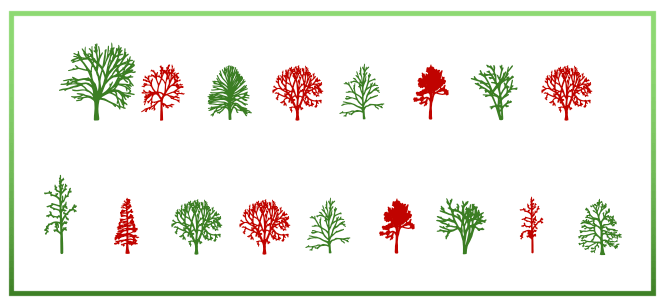
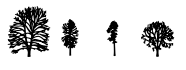
Afternote – The image in this post is an encoded message written in Tree Font created by Katie Holten. If you need help decoding it then click here

Garden amendments – some myths and tips

In some of my earlier posts on healthy soil and composts I have alluded to the use of compost extracts, teas and other garden amendments but what are they and when are they useful?

When I first started on my path to regenerating my soil and growing healthier plants I found the literature on the topic of garden amendments quite confusing. There seemed to be so many options of things to make or buy and conflicting information about their potential benefits. Over time and quite a bit of research and experimentation I have come to realise a few things which I would like to share with you here. For the sake of simplicity I will refer to compost extracts, teas and other preparations collectively as amendments.

Before I go into any detail on which amendments are useful and which are not, I feel it useful to discuss briefly why we might want to use them at all – do we need anything more than good compost? When we have healthy soils and are only needing to add compost to replenish soil nutrients used up by the previous crop then I would argue we probably don’t need extra amendments, but since most of us or a journey towards healthy soil there are situations in which amendments can give a valuable boost to our plants and soils.

Many soils are deficient in key minerals which plants need for healthy growth and, critically, they lack a healthy population of soil food web biology which is essential for establishing a healthy plant microbiome. In the early years of soil regeneration the judicious use of appropriate amendments can help us to produce healthier plants which in turn, when we compost their residues, can lead to the generation of healthier soils in subsequent seasons. Thus, amendments are a useful way of rapidly addressing chemical nutrient and plant biology imbalances allowing us to kick start our soil regeneration.

Ahead of discussing what I would term useful amendments I would like to briefly mention some amendments that are not useful, or even desirable (and why).

Undesirable amendments – typically high in chemical nutrients but possessing undesirable biology.

  • Liquids which leach out from the bottom of compost piles or worm bins. I see a lot of references to this and I would warn against their use. Whilst they may contain useful plant nutrients they are typically unpleasant smelling which means they have been formed under anaerobic conditions in which many pathogenic bacteria thrive and thus are not a source of desirable plant biology. [As a side note – if you are keen on making high quality worm compost (which does not produce any leachate) then you might want to check out Rhonda Sherman’s guide]
  • Compost left to steep in water for a few days, unaerated and then filtered and used to water plants – this is sometimes referred to as compost tea. Again the same issues as for compost leachate apply – anaerobic conditions foster the growth of undesirable microbes. There are better ways to make compost teas, we will come back to this later.
  • Preparations of plant matter which are left in water for a number of days or weeks. This seems to be a common way of making “fertiliser” preparations from plants such as nettles or for decomposing roots of plants like couch grass or bind weed. Whilst these methods are effective at extracting valuable nutrients they again suffer from the same problem of introducing undesirable biology which is signified by the extremely unpleasant smell produced by such concoctions! Again there are better ways to utilise such plants as nutrient sources, I will touch on these later on.

Like me, I expect you have used some of the above amendments. Why wouldn’t you – you see recommendations for them everywhere! The reasoning most people offer for their use is that they work. After a fashion they do, mostly because of the high chemical nutrient levels they possess. But the effects are often short lived and the risks of introducing undesirable (pathogenic, disease causing) microbes outweighs any benefits to their use in my opinion.


So what should we do instead? The answer depends on what the soil or plants need – what are they deficient in? This could be either chemical nutrients (i.e. key minerals) or biology (i.e. imbalanced soil food web populations). You can determine what is missing by observing your plants/soils or by directly testing them. Lets take each case in turn.

Nutrient deficiencies can be apparent from observing the leaves and shoots of your plants which will show fairly characteristic problems if for example there are low levels of nitrogen, phosphorous, iron, magnesium, calcium etc. The lack of other key minerals such as sulfur, boron, manganese etc. can be harder to spot but equally important.

To better understand your soil chemistry it is a good idea to send off a sample to be tested,  there are some labs that will test samples from small growers and gardeners at a very reasonable price. Once you have an idea of any imbalances in your soil nutrient/mineral levels then you can look to address this by adding appropriate amendments many of which you can prepare yourself from cheap and readily available sources.

I don’t want to go into a lot of detail on the preparation of nutrient amendments here – this could be an article all of its own. I will just describe a couple that I have used to good effect and point you towards further sources of information.

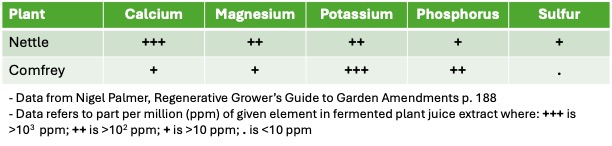
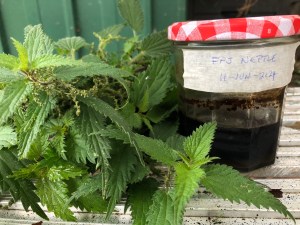
Both nettles and comfrey are a good source of mineral nutrients – see the table below for a summary. You can of course add these to your compost pile to enrich the compost that you make but if you want a more immediate source of mineral supplements to address deficiencies in your plants and soil then you can make an extract called fermented plant juice (FPJ) which will be shelf stable for up to a year and (if made correctly) will not smell unpleasant.

The secret to making FPJ is to use a lot of sugar which acts to extract moisture from the plant material and dehydrate any microbes so that they go dormant rather than multiplying. The result is a rich, dark liquid which smells strongly of the plant you extracted; in the case of nettle and comfrey is a distinctive rich earthy smell. You can find out how to make FPJ (and other related Korean Natural Farming – KNF – approaches) by clicking on the links here – Nigel Palmer FPJ prephttps://www.biomei.solutions/resources

I tend to make a fresh batch of FPJ in the late spring using either nettles from the end of my garden or the comfrey which I cultivate next to my compost heaps. Once its ready to use it can be diluted (approx. 500-1000 fold) in rain water and added to plants either as a soil soak or sprayed onto leaves to give a more immediate mineral boost. Its always a good idea to do a sniff check before you use it, especially if you’ve stored it for a while. If it smells musty, rotten or chemical (like alcohol or nail polish remover) then don’t use it at will not do your plants any good – you can recycle it into your compost heap and make a new batch.

I have used these simple extracts to good effect for the past couple of years particularly to address issues with mineral deficiencies in my fruit bushes and to help young plants build resilience towards attack from aphids and other insects. As my initial soil test results (see earlier) identified a slight sulfur deficiency I have also found nettle FPJ to be a good supplement to feed my brassicas and alliums with.

Home made Nettle FPJ made from garden nettles

Soil biology imbalances are not as complex to address as they might seem. After all if you are making good quality compost under aerobic conditions you are already on the road to doing this. So what biological amendments can you readily make and when would you use them? This is a huge topic so I will focus on the approaches I have been using thus far and point you to further options at the end of our discussion.

Again the best way to know what your soil is missing is to analyse some samples, in this case using a microscope. Thanks to excellent tuition from Eddie at Rhizophyllia I learned to do this myself, at least to a level which gives me a qualitative guide. If you feel this is beyond you, then again there are places which will test the soil biology for you.

If soil analysis is not an option for you then fear not! There are some simple signs of what could be missing based on things you can observe about your soil and plants, I will allude to these in the discussion below.

Compost Extract – biology amendment with several potential uses.

  • Add to mulches to aid their break down – symptom to be addressed – so called constipated soils which have a lot of undecomposed organic matter on or near the surface.  These tend to be high in bacteria but not much other biology and thus can’t break down organic matter in the soil very effectively.
  • Inoculate seeds or the roots of transplants – symptom to be addressed – seedlings and young plants are weak with poor root systems and vulnerable to attack from pests (e.g slugs, aphids)

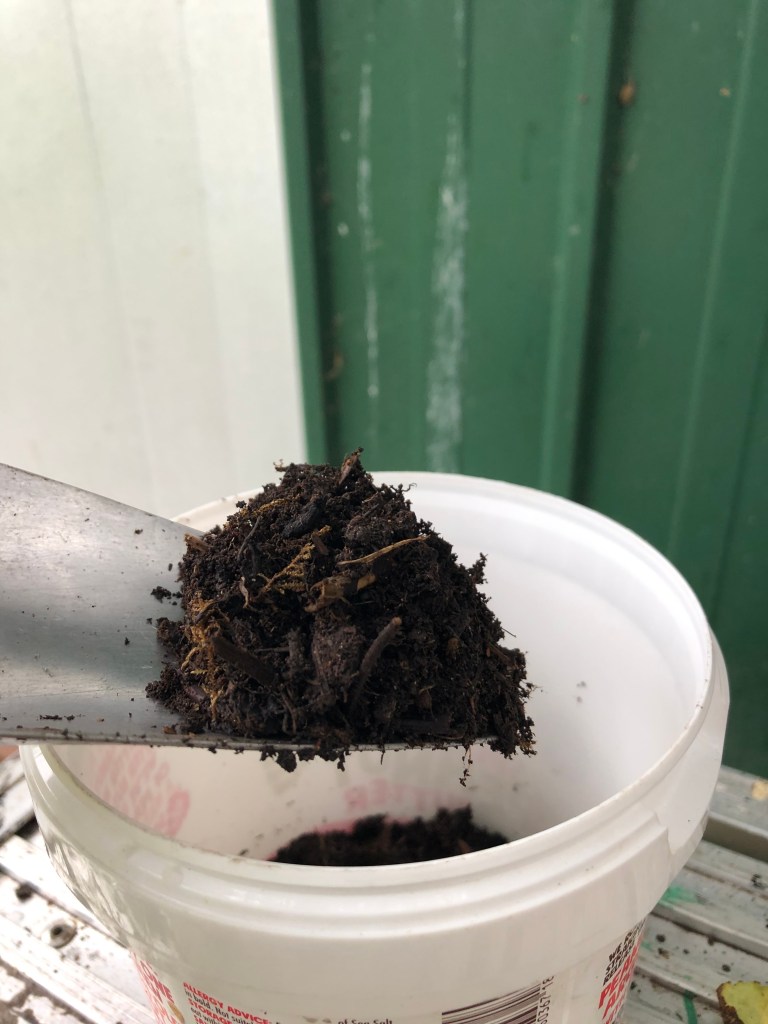
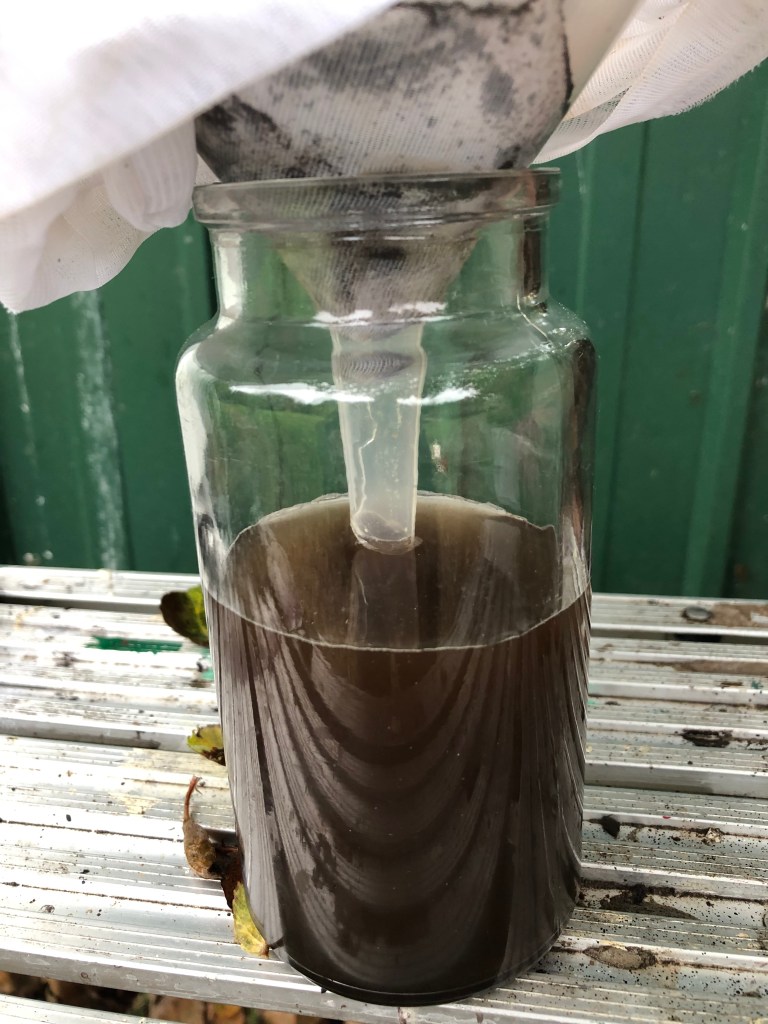
Compost extracts are very simple to prepare and use. All you need is some good quality compost and some rain water, a small bucket, funnel and some filter mesh (typically I use 100 micron brewing mesh). Ideally the compost has been analysed to ensure that it contains a good level of soil food web biology but if you cant do that then use your nose; if it smells in any way unpleasant then don’t use it!

Compost with plenty of soil biology

This season I chose to use some of the hot compost that I prepared in the spring as it was rich in soil food web members – see my earlier compost diary post on this topic.

Here is a quick recipe which provides about a litre of compost extract.

  • Place 1 litre of rainwater in a small bucket
  • Add approx. 100g of good quality compost
  • Stir gently and allow to stand for about 30 mins then stir again
  • Filter through mesh into a clean container
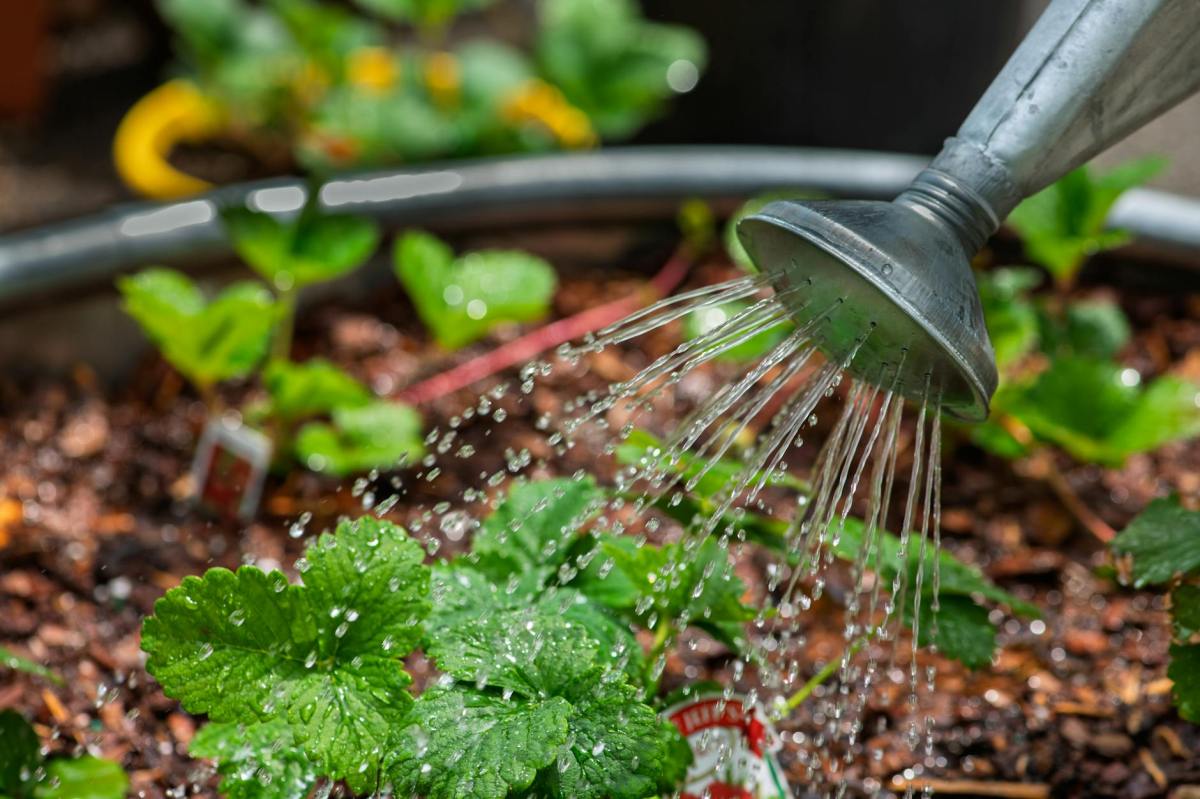
  • Dilute roughly 10 fold before use (e.g. 1 litre of extract in 10 litres of rain water to be applied using a watering can)


Summing up key points

  • Amendments can be useful to address deficiencies in poor soils at the start of your regenerative journey.
  • Pay attention to both mineral nutrients and soil biology – your plants need both
  • Be careful about using amendments that may come from anaerobic processes – don’t use it if it smells bad!

The final class of amendment which deserves a mention is Actively Aerated Compost Tea which can be used as a soil soak and/or foliar spray to further enhance the health of soils and plants. Making good quality aerated composted teas is something of an art and I have yet to fully get to grips with approach. I plan to do some more in-depth experiments in the coming season and will be sure to share my results in future posts. Until then – Happy Growing!

Autumn Equinox – Hope and Gratitude

Today marks the Autumn Equinox in the Northern Hemisphere. A turning point in time, when the days become shorter than the nights and the world around us begins to draw inwards preparing for the Winter ahead.

We are grateful for Nature’s bountiful harvest, our cupboards are full and the act of replenishing our winter stores is in full swing. There is much to be thankful for. In spite of the dry conditions the plants we have nurtured in our small garden have given up much to provide us with food for our table. It is a mast year and the trees in particular have yielded such a bounty of fruit that we can barely cope with the surplus. Yet nothing is wasted.

I am reminded of a quote from Robin Wall Kimmerer.

I store my meat in the belly of my brother

The food we could not eat, or store ourselves we have shared with our human friends and that which was left we shared with our wild friends (birds, squirrels, others) and with the soil beneath our feet ensuring that the hard won nutrients and energy are returned to the plants for future years.

In spite of all this bounty, as the days darken and the Summer colours fade it is easy to allow ourselves to fade a little too. Yet we remain hopeful. But what is hope? I would like to share with you a poem I wrote a year or two ago which explores this question.


What is Hope?

Is living in hope for a better tomorrow holding us back from doing all that we can today?

Is hoping too much for a better tomorrow making us judge our efforts today as too small?

Or is hope the tension which brings balance to this moment, helping us to make each day better than the last, with still enough energy for the next?

Heather Comina, October 2023

Images in Tree font created by the artist Katie Holten


I would like to think that hope is the tension bringing balance to this moment. I know that I am not alone in this and there are many others who share my world view and work tirelessly towards a future where we have regained our sense of belonging in this world, in harmony with the land and the Earth we call our home.

Thank you for sharing my journey. Happy Equinox!

Compost Diary – the evolution of a hot compost pile

Early in the spring I was beginning to run short of home made compost. At the start of May I decided to take advantage of the first flush of grass and comfrey growing at the end of my garden along with the left over mulched leaves that I had cleared from over-wintered beds to make some “Hot Compost“. This composting method is a fantastic way to rapidly access a source of compost which is both rich in nutrients and bursting with soil microbes, ideal for feeding hungry brassica crops and preparing extracts (what I term protist soup) to give plants a regular boost throughout the growing season.

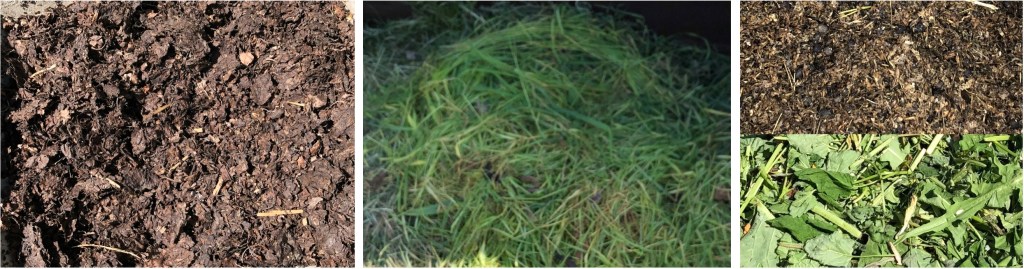
Making hot compost is something of an art. You need a fairly large quantity (at least a cubic metre) of balanced inputs. Roughly a third brown, a third green and a third manure. I discussed compost inputs in some detail in my previous post – The Art of composting; in this case I used dried leaves as the browns, grass cuttings as the greens and a mixture of chopped comfrey, rabbit manure and coffee grounds as the manure components. You also need a fair amount of water (not chlorinated) to ensure the moisture level of the pile is around 80%.

Compost Inputs – from left to right – brown leaves; green cut grass; rabbit manure mixed with coffee grounds and chopped comfrey

The other thing you need is plenty of human energy! The pile needs to be created in one session, building up alternate layers of brown, green, manure, watering as you go. It then needs to be turned every few days to control the temperature, maintain good oxygenation and to ensure that all of the pile is well mixed and exposed to the higher temperatures at the centre. Overall a pretty good workout!

To enable easy turning I constructed the pile inside a wire mesh cage. The inputs were layered in until I had a completed cylinder of roughly 1 cubic metre. I then covered the whole pile with a canvas bag to keep out light and moisture in. The bag and wire cage could be easily removed to allow ready access to the pile for turning – simple.

Stages of construction – from left to right – wire cage; completed layered pile; covered pile

Compared to other composting methods, hot composting is pretty quick, taking just a few weeks to yield a usable compost but how do you know when its ready to use?

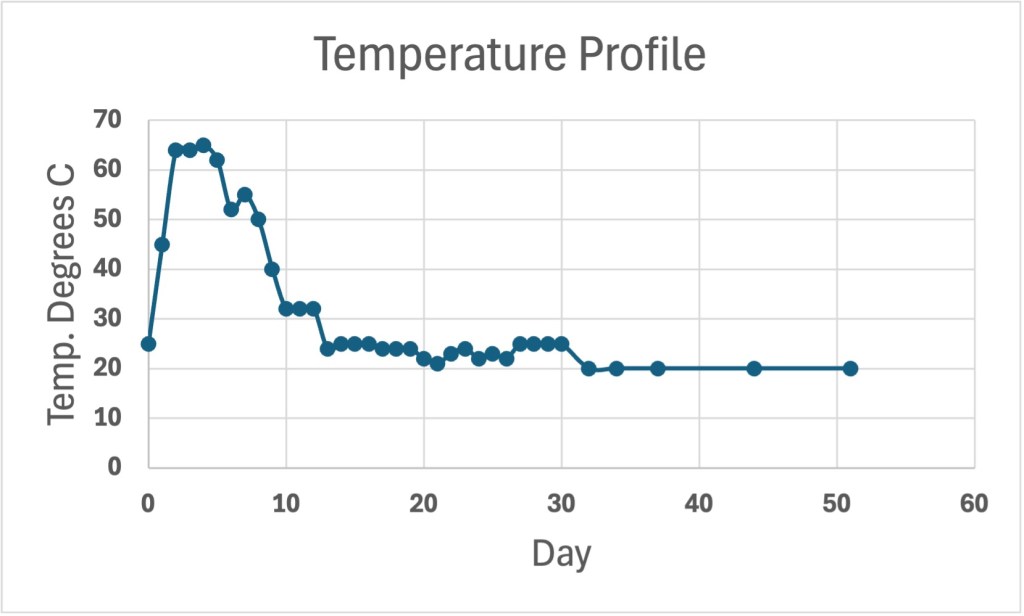
One of the ways is to monitor the temperature of the pile using a compost thermometer [See Box 1]. A well made pile heats up pretty quickly the initiation phase typically takes a couple of days. In my case the pile reached 45C in less than a day and by day 3 was already at 65C and needed to be turned to stop it overheating. This hot phase of higher than 40C can last a few days. After 9 days my pile had started to drop below this level and at 16 days was consistently around 25C, finally cooling to 20C by day 37 and beyond.


Box 1temperature profile

There are three distinct temperature phases of the composting process – Mesophilic, Thermophilic and Maturation. The length of time the pile spends in each of the phases depends on its size and the type of inputs used.

Mesophilic – composting is driven by organisms which thrive between 20-40C, typically bacteria, some fungi and larger organisms such as protists and nematodes.

Thermophilic – the activity of the organisms in the mesophilic phase creates heat which drives the temperature above 40C. A new set of organisms which thrive in higher temperatures (40-65C) now takes over and the mesophilic organisms die off or go dormant. At these temperatures pathogenic bacteria and any plant seeds are killed off.

Maturation – as the thermophilic organisms rapidly consume the easy to digest nutrients in the compost the temperature begins to cool again. Once the threshold of 40C is reached the dormant mesophilic organisms start to takeover again. Over time the population of soil food web members increases and the slower job of breaking down the harder to digest compost ingredients begins.

The temperature profile of my hot compost pile is shown in the chart below.

Temperature profile of compost pile over the 51 day period

For more detailed information about the stages of the composting process click here.


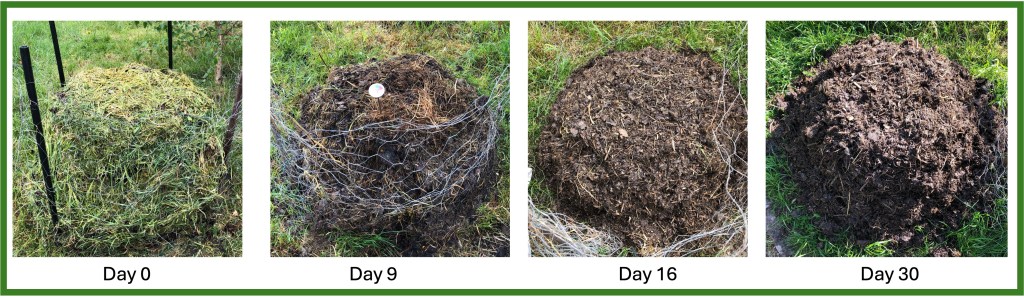
You can also see visual changes in the compost pile over time. The size of the pile gradually reduces to about a third of the original size and the contents become more and more compost-like in appearance as the plant matter breaks down and the individual inputs become less distinct.

Visual timeline of compost evolution

As a general rule of thumb it is recommended to wait for 16 days for the pile to cool and then allow a further week or two before using the compost which at this point will be very fresh and high in nitrogen – ideal for using on hungry crops like brassicas.

But I was curious – at what point would my compost be suitable to use for making an extract (protist soup) and when would it be suitable to use on my beds to feed my brassicas? How was the soil biology profile changing over time?

This is where soil microscopy comes into its own. By taking samples at various points during the lifetime of my compost pile and analysing them under the microscope I was able to get a sense of how the soil food web (SFW) was evolving. For more details on the soil food web see my previous post – Secrets of Healthy Soil.

The detailed results of the microscopy analysis are presented in Box 2. However, there are some key points which I found quite insightful and want to share with you here.

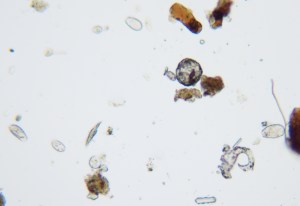
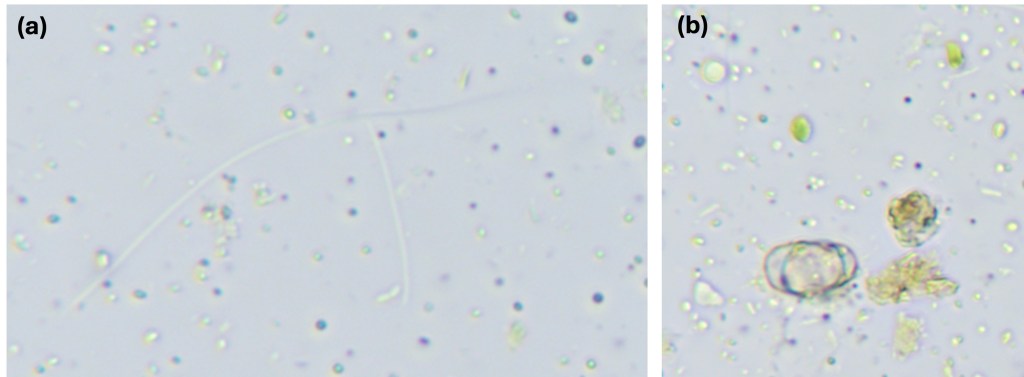
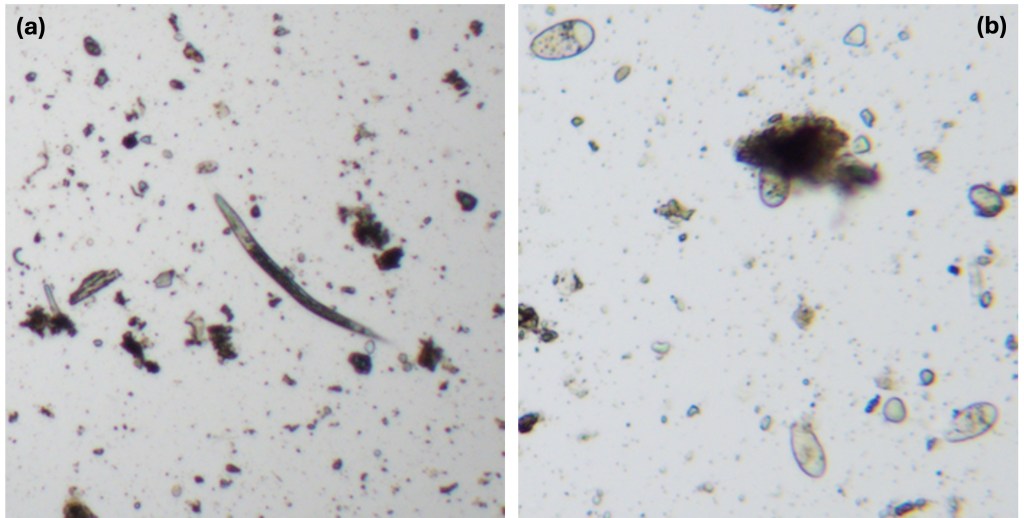
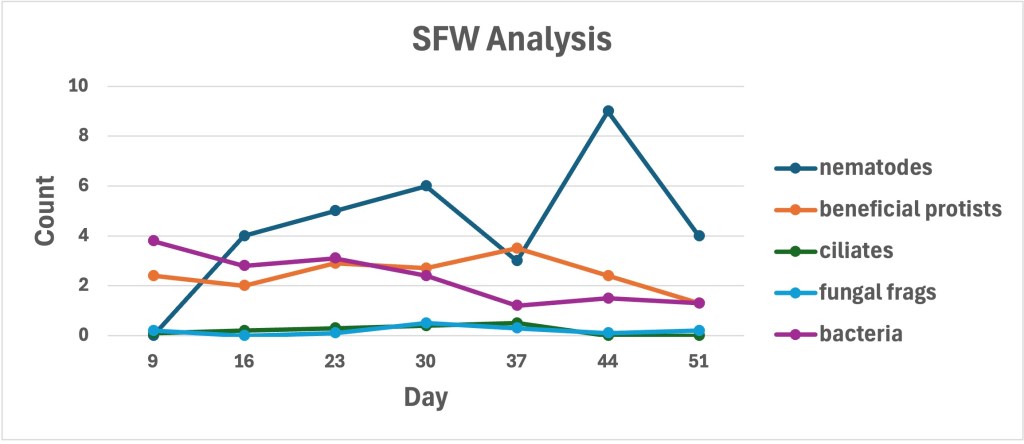
The analysis at day 9, when the hot phase was just coming to an end, showed very high levels of bacteria. This is to be expected as it is mainly bacterial activity that drives the heating of the pile. There were also lots of actinomycetes strands (a type of filamentous bacteria) but only a few protists (mainly flagellates) and no nematodes, this too is not surprising as they don’t like the heat. Fast forward to day 16, now the profile looks quite different. Bacterial numbers are still quite high but we also see nematodes, principally bacterial feeders. The protist levels have also increased with growing numbers of amoeba present.

Day 9 microscopy images at 400x – (a) filaments of Actinomycetes; (b) amoeba and encysted flagellates in a sea of bacteria
Day 16 microscopy images at 100x – (a) nematode; (b) several amoeba

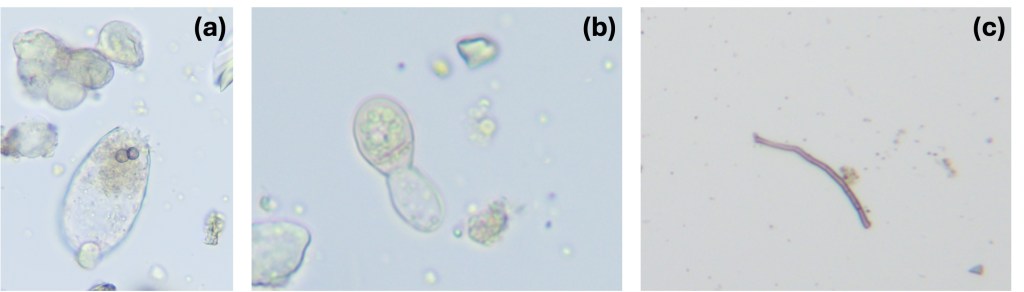
By day 30 the optimal balance of soil food web members appears to have been reached. The nematode population was beginning to evolve further with the presence of larger predatory nematodes as well as the regular bacterial feeders. The protist population was also very vibrant with an array of different types and sizes of amoeba. In addition there were some signs of fungal life with a few fine filaments beginning to emerge from spores. In the final analysis I conducted on day 51, the picture was broadly similar but the nematode and bacteria numbers were showing signs of decreasing as the compost moved into a maturing phase.

Day 30 microscopy images – (a) fungal thread sprouting from spore and amoeba; (b) predatory nematode; (c) amoeba and encysted flagellates; (d) large naked amoeba
Day 51 microscopy images – (a) large amoeba; (b) pair of amoeba; (c) fungal thread

So did the microscopy analysis answer my question – when was the compost ready to use either on my beds or to make protist soup?

Based on the results I would say around day 30 was the optimal point to start using the compost – when the soil food web population was high and well balanced. This ties in nicely with the temperature profile when the pile was pretty much back at around 20C. Visually the compost also looked like compost, it felt and smelled like compost too. Gratifyingly my observations were also in line with the rule of thumb guidance mentioned earlier.


Box 2 – Soil Food Web analysis

Evolution of Soil Food Web population over time
  • Nematode count – number per drop of sample
  • Fungal fragment count – average number per field of view at 100x magnification
  • Beneficial Protist (amoeba, flagellate) count – average number per field of view at 400x magnification
  • Ciliate count – average number per field of view at 400x magnification
  • Bacteria count – estimated number of billions in 1g of compost

This semi-quantitative assessment of soil food web (SFW) populations was carried out according to the following protocol:

A sample of hot compost was taken from the middle of the pile during the turning process. 5g of compost was diluted with 50ml of distilled water (1:10 dilution) and shaken gently. After leaving the debris to settle, a drop of the liquid was taken and placed on a microscope slide. Three drops were analysed for each compost sample.

At 40x magnification the number of nematodes on the whole slide was counted.

At 100x magnification the average number of fungal fragments per field of view (FOV) was estimated by counting the fragments in 10 randomly selected fields.

At 400x magnification the average number of protists (amoeba, flagellates and ciliates) per FOV was estimated by counting the number of each observed in 10 randomly selected fields.

To estimate the number of bacteria present a 1ml sample of the initial 1:10 dilution liquid was further diluted to make up 10ml (overall 100 fold dilution). A drop of this sample was placed on a cell counting slide and the number of bacteria present in each of a series of 10 randomly selected 50 micron squares was counted. These values were then used to calculate an estimate of the number of bacteria present in a 1g sample of the compost.

As a reference point the SFW population of a typical mature compost is as follows [data source – Regenerative Soil Microscopy, Matt Powers, p.181]

  • Bacteria – 4-10 billion per g of compost
  • Nematodes – 3-7 per drop (beneficial types not root feeders)
  • Fungi – average of 1-5 fungal strands per FOV at 100x
  • Beneficial protists – average of 3-12 per FOV at 400x
  • Ciliates – less than 3-5 per drop

Was all the effort worth it? I am pleased to say my brassicas certainly seemed to like it. I was also able to use the compost to make several batches of protist soup which I applied to my crops  every 3-4 weeks across the growing season. Qualitatively the crops look healthier, what I have harvested thus far tastes fantastic. We will have to wait until my end of season soil analysis to get a sense of how effective the application of protist soup has been. I will share this, along with more details on making and using protist soup and related compost teas in my next instalment of the Compost Diary – until then happy growing!

The Art of Composting

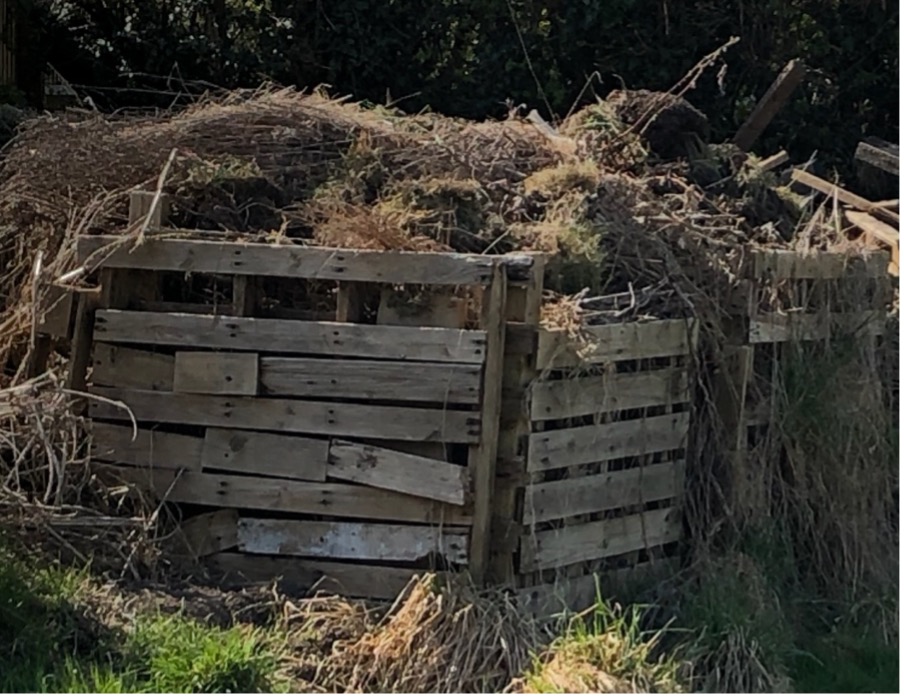
One of the key steps on my growing journey was learning how to make good compost in sufficient quantity to regenerate the soil and maintain fertility from one season to the next. My compost pile, let’s call it Compost Pile 1.0, was typical of many that I see in local gardens and allotments; a straggly pile of slowly decomposing garden waste which seemed to take for ever to break down. I quickly realised that I was going to need to find a better way to make compost or face buying a lot in from elsewhere.

Compost Pile 1.0 – Photo by Heather Comina

But what is compost? The “compost” you find in a typical garden centre is not really compost but rather a growing medium which contains some form of organic matter with added nutrients (either chemical or organic in origin). Compost is something rather different. In addition to organic matter and essential nutrients a good compost also contains a host of soil biology which is essential for establishing healthy soil which, in turn, leads to healthy plants. See my earlier article on the Secrets of Healthy Soil.

Compost is a mixture of ingredients used as plant fertilizer and to improve soil’s physical, chemical, and biological properties. It is commonly prepared by decomposing plant and food waste, recycling organic materials, and manure.

Wikipedia definition – https://en.wikipedia.org/wiki/Compost

Not all composts are the same and the kind of compost you choose to make (and use) will depend on the type of plants you want to grow. Different kinds of plants require a different balance of nutrients and, in the case of nitrogen, different forms (nitrate vs ammonium). The soil biology that is present has a big influence on the availability of nutrients, with bacterial dominant alkaline soils favouring nitrate loving plants (salads, greens etc.) and fungal dominant acidic soils favouring ammonium loving plants (fruit bushes, trees etc.) – See Box 1 for more details.


Box 1

The diagram shows the succession from bacterial dominant marginal land to fungal dominant old forest. As the soil shifts from bacterial dominant, through balanced, to fungal dominant so does the pH (from alkaline to acidic) and the primary nitrogen source changes from nitrate to ammonium.

Most soils have at least some fungi present which are essential for the cycling of other key elements, such as phosphorus, and the breakdown of carbon rich plant matter which is high in cellulose and woody lignin.

Leafy crops thrive in soils which are more bacterial dominant. However other crops which produce, roots, seeds, or fruits require an increasing level of fungal activity to attain good plant health and ensure good crop yields.

Data source – J Lowenfels & W Lewis, Teaming with Microbes page 113; Diagram created by Heather Comina
The “ingredients” and method used to make compost will influence the make-up of the soil biology and the nutrient balance of the end result. I like to think of it as being a bit like making a cake, with some composts being light like a sponge and others being heavier like a rich fruit cake.

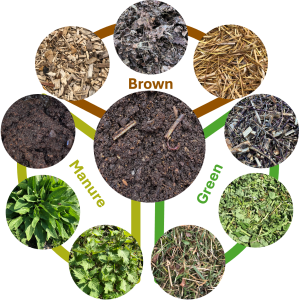
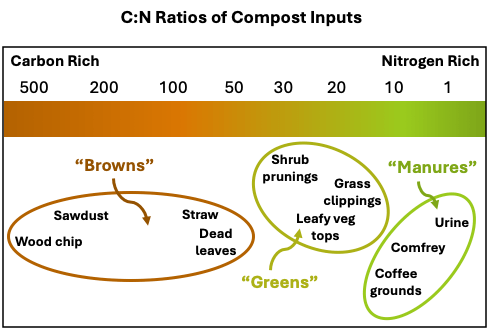
In all cases a good compost requires a roughly equal mix of “browns”, “greens” and “manures” along with sufficient water to keep it moist and enough air to ensure the right microbes as encouraged and the compost does not become smelly. Bacteria mainly decompose the more nitrogen rich manures and greens whilst Fungi are needed break down the tougher more carbon rich browns – See Box 2 for more details on compost inputs.

Examples of Compost inputs – Browns include carbon rich wood chip, straw, dried leaves; Greens include mulched green prunings, leafy veg tops, grass clippings; Manures can be animal derived but also include nitrogen rich nettles, comfrey and coffee groundsDiagram and Photos by Heather Comina

Just like with cake baking the “cooking” time for composts also varies with a light bacterial rich compost being ready in about a month, a more balanced bacterial/fungal compost being mature in 3 months and a heavier more fungal dominant compost taking a year or more to mature.


Box 2

A rule of thumb is to use roughly a third browns, a third greens and a third manures to create a well-balanced compost aiming for a C:N ratio in the range of 25-30. The diagram shows the carbon to nitrogen ratios (C:N) of various common compost inputs. A set of online compost calculators are also available to help with deciding on the exact proportions to use – these are particularly useful if you are composting at scale.

Data Source – Perrine & Charles Herve-Gruyer, Living with the Earth, Vol. 1 p. 97; Diagram by Heather Comina

There are a variety of methods for making compost (see list below). All of them share some basic principles:

  • inputs should be roughly chopped
  • browns should ideally be pre-soaked in rainwater to ensure there are no dry pockets
  • inputs should be added as a mixture or in alternating layers (brown, manure, green, brown etc.) a few centimetres deep.
  • the final moisture level should be about 80% (a drop of moisture comes out if you squeeze a handful)
  • the pile should not be allowed to dry out or become waterlogged over time.

Some additional composting approaches are listed here.

  • Hot Compost – rapid method generally results in a bacterial dominant compost
  • Mouldering or Slow Compost – resulting compost can be bacterial dominant, balanced, or more fungal depending on the inputs used and maturing time
  • Johnson-Su – combines hot composting with a longer maturing phase that results in a more balanced compost
  • Vermicompost (worm composting) – bacterial dominant compost, very nutrient rich
  • Bokashi – special anaerobic pre-composting method useful for processing food and kitchen scraps

For more information on these head to the resources section on the growing better page of my website.


For certain composting methods there are additional things to consider. If you want to make a hot compost you will need to ensure your pile is at least 1m3 otherwise it won’t get hot enough. As you require a lot of material all in one go, this type of compost is often best prepared towards the end of the growing season. I will talk about this approach in more depth in a subsequent article.

The simplest option is to make a mouldering/slow compost pile which you can add to gradually, but you will still need to pay attention to what you add. Some of the common errors with slow composting are not chopping up the inputs sufficiently, not paying attention to the balance and layering of inputs (brown, manure, green), not adding sufficient moisture or allowing the pile to get too waterlogged. Covering the pile to retain moisture and avoid waterlogging is useful and this also ensures that the pile is shaded; microbes don’t like sunlight.
Not paying attention to these aspects tends to result in piles that are very slow to break down just like the Compost 1.0 pile featured at the start of this article. It is also best if the mouldering pile is turned a couple of times as it matures to ensure it is kept well aerated. Having 3 “bins” roughly 1m3 in size, next to each other so you can turn from one to the next and always have compost at varying stages of maturity is ideal.
Compost Pile 2.0 – a series of covered compost bins constructed from wooden slats. Right hand bin is being filled; middle bin is maturing; left hand bin contains final stage compost ready for usePhoto by Heather Comina

Having access to the right kind of compost is key but how much of it do we need? As with everything else the answer is – it depends. If your soil is very depleted or you are creating a new bed, then you will need quite a bit. However, if you are just looking to top up a bed to maintain fertility then you will need less. As a general guide the advice from Charles and Perrine in Living with the Earth (vol 1 p. 250) suggests the following:

  • If you are starting a new raised bed – apply ~10cm depth, ~50kg per square metre
  • For early bed maintenance – 2-3 cm depth, 10-15 kg per sqm; at each rotation [i.e. 2 x per year]
  • For established bed maintenance it depends on whether transplanting or direct sowing. If transplanting use more mulch and less compost except for heavy crops such as brassicas where compost is needed. If direct sowing treat as for an early bed because the soil will be without mulch for a few weeks prior to and after sowing

Of course, compost is only one of the tools available to us to help build and maintain soil fertility. Mulches, compost extracts and teas and other types of bio-amendment also have a role to play. I will cover these in more depth in subsequent articles.

For now – happy composting!

Celebrating Permaculture

The Permaculture movement focusses on nurturing each other and the planet, creating a resilient future together. In that vein the UK Permaculture Association has recently launched its Permaculture Digest, comprising a range of articles and wisdom sharing nuggets written by the members, for the members.

Permaculture Ethics – Earth Care, People Care, Fair Share.
Courtesy of https://permacultureprinciples.com/ethics/

I am excited to have one of my articles “Healthy Soil Secrets” included in the first edition! Click here for a related post on my blog.

Healthy Soil Secrets – Microscope Images of Soil Food Web organisms

If you want to learn more about Permaculture and what the members are up to then head over to the Permaculture Website. There is so much on offer, from training courses, publications, networking and regular events – something for everyone.

Becoming a member is easy. If you would like to join the growing Permaculture family then simply click here.

The Signal Tree

I recently had the pleasure of joining some fellow poets and artists to read some of the poems and enjoy the artwork included in the latest Poets Trail anthology compiled by renowned local artist Linda Benton.

The theme of this anthology is Didcot Oaks and other notable trees. It is a celebration of the many oak (and other) trees that are scattered across the Didcot landscape and beyond. I was delighted that my poem – The Signal Tree – has been included. Linda has created a marvellous depiction of the tree which captures the essence of her being.

The Signal Tree painting – reproduced with kind permission of the artist Linda Benton

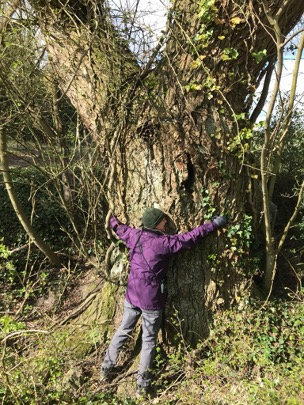
I first met the Signal Tree during the lockdown period of 2020. I found her, or rather she found me, on a walk through the local fields. The world seemed to slow down around her. I stood in awe. She was enormous, I could reach around but a fraction of her girth. I tried to imagine how long she had stood in that place, what she might have witnessed.

The Signal Tree – photo courtesy of Katherine Comina

Only later did I discover that she is a rare tree, possibly 200 years old, or more. A female Black Poplar of which there are only two to three thousand remaining in the UK. She is the source of inspiration for my novel – Generation 8 – my imagining of the story she might tell; the wisdom she might have to share.

The Signal Tree

In the corner of a field stands a tree.
It is nearing the close of its time gracing the verge of the meadow,
hosting many generations of short-lived things.
It is a tree of haphazard beauty, of riven bark and broken branches.
Twisting roots delve into the banks of what was once a tumbling brook,
now just a trickle running dry each summer.
Soon it will share one last winter with us before, with rotten trunk,
it succumbs to the roaring gusts of an easterly storm.
~
In the corner of a field stands a tree.
It is a signal tree standing watch over this place.
Like the generations of long-decayed ancestors,
holding testament to the transforming landscape,
casting shadows into memories, imprinting patterns in the very tissues of their wood.
~
In the corner of a field stands a tree.
It is the Signal Tree, waiting patiently to be found, to be seen.
Not seen with just the eyes but seen with all the senses.
Waiting to be known in ways long forgotten, to be known and understood.
Waiting to share the burden of its secrets, the millennia of memories passed from ancestor to clone, the patterns in their wood.
~
In the corner of a field stood a tree.
It was the last of a long family line,
each generation somehow casting forth a path into the future.
Spread not just by seed, but by clone, sucker, windthrow.
It was the daughter of an ancient tree,
not two hundred years alive, but one thousand years or more,
springing forth from the mother of her kind.
And yet, we should not lament the passing of this tree.
When in the darkness we stand, seemingly alone,
we should open our minds, our hearts, our senses
to all the wisdoms of our pasts, to the faintest whispers in the wood.

Do not give up; our hope is strong.

Heather Comina, 2022

The Signal Tree © 2022 by Heather Comina is licensed under CC BY-NC-ND 4.0

The Signal Tree poem provides a linking thread woven through the unfolding tale of Generation 8. A tale of the local parish, the community (of people and other beings), the land. A tale of reconnection. A tale of hope for our future and that of the next generation.

Growing Better – New Video on Protists available

The second video in my series on Soil Microscopy is now available on the videos page. The theme is Protists (sometimes called Protozoa). There are three main types of Protist which form part of the Soil Food Web family; these are Amoeba, Flagellates and Ciliates. They are much smaller than the nematodes, if you have a good eye you can spot them at 100 fold magnification but they are best viewed at 400 fold magnification (or higher).

I have tried to capture the Protists in their various forms (testate, encysted and naked) to give you a sense of what you might expect to see under the microscope.

Hopefully you find the video a useful guide for your own exploration of soil ecosystems – Enjoy!

Growing Better – New Resources

I’m excited to share with you a couple of new resources that I am compiling to supplement the Growing Better theme.

The first resource is a new gallery page where I am uploading images from my soil microscopy studies. If you ever wondered what common Soil Food Web members look like then hopefully these images will help you.

The second resource is a set of short videos which provide further perspective on some of the more mobile Soil Food Web fauna. I’ve started with a quick overview on nematodes which are perhaps the easiest things to spot when looking under the microscope even at low magnification.

I will gradually be adding to these resources as I explore more soil and compost samples over the coming months. Hopefully you will find them useful in your own exploration of soil ecosystems.

Generation 8 discount code – closing soon!

If you are looking for a thoughtful and inspirational gift for a friend or loved one then I am still offering a supporter discount of 15% on my novel Generation 8.

Stories akin to the age old wisdom tales can be an effective current day means of communicating important ideas such as solutions to our climate and ecological crisis.

Generation 8 is my wisdom story mediated through a deep connection to nature, our sense of place and belonging, laying stepping stones towards a better future.

“…Generation 8 is a metaphor for hope and possibility once we open our eyes to the myriad ways for humans to connect with nature and to think long term in the interests of future generations. …And it’s a really good story, with lively, sympathetic characters who you will remember long after you’ve put the book down. Read it!

Jane Davidson, author of ‘#Futuregen: Lessons from a Small Country’, Chelsea Green 2020

To claim your discount go to the Troubador online bookshop and enter the code Regener8 at the checkout page – Happy reading!